
B Ag Caint: What the B Corp Movement Looks Like in Practice
At Colectivo, we believe sustainability must be actively practiced to be truly FutureProof.
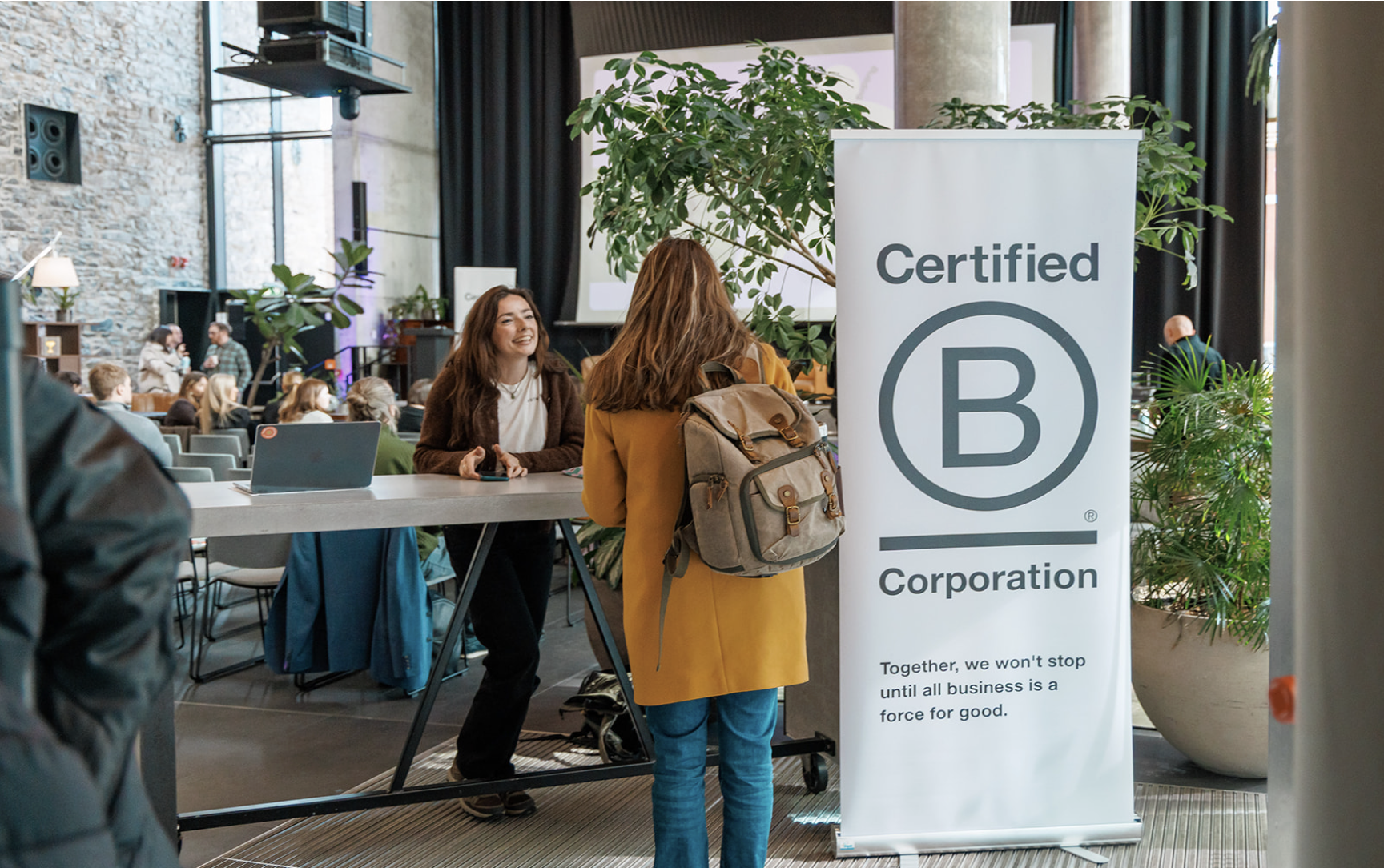
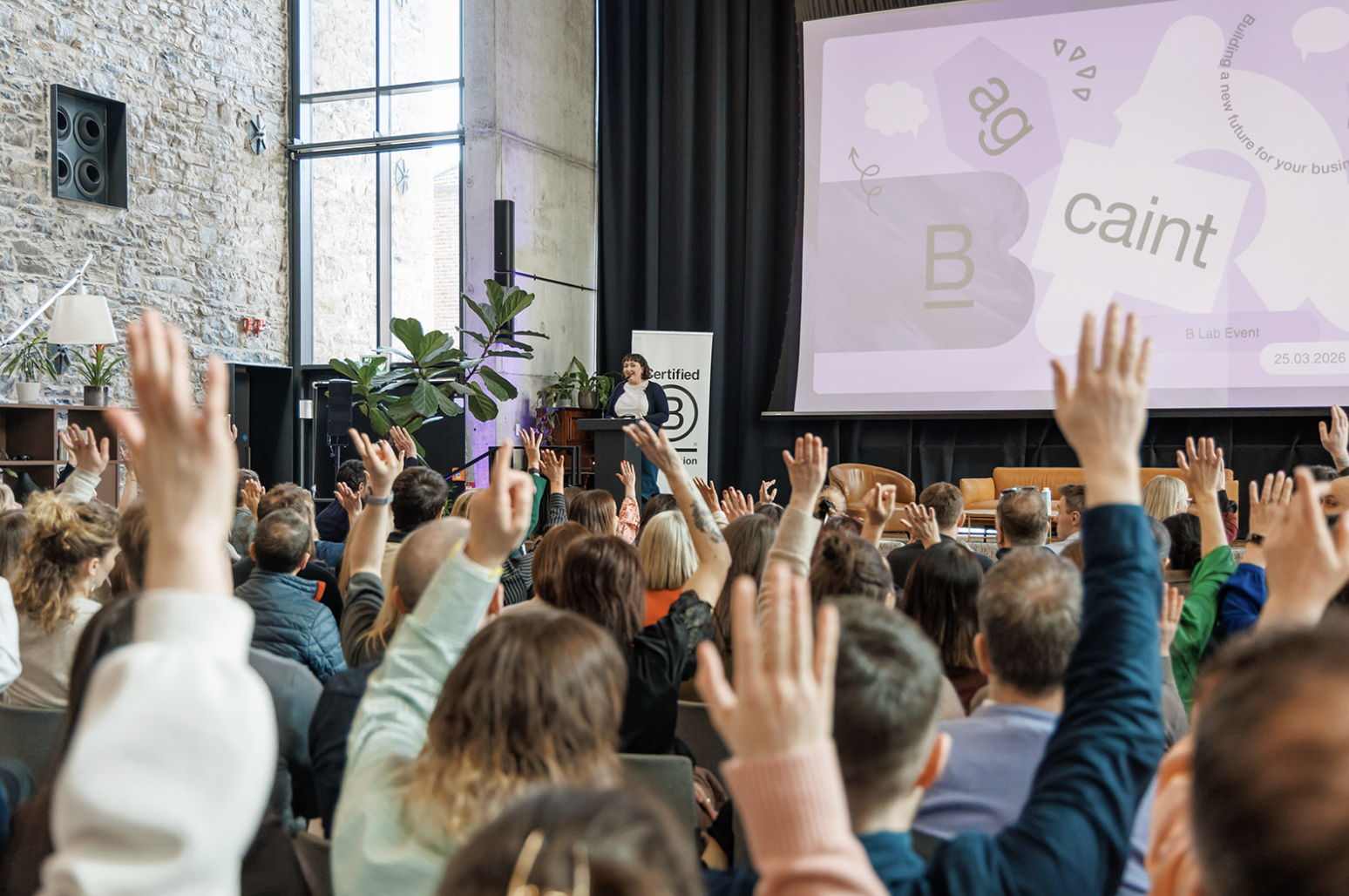
Earlier this month, I attended B Ag Caint – Let’s Talk B Corp! in Dublin on behalf of Colectivo, joining Ireland’s expanding community of businesses committed to positive impact.
Inspired by the Irish phrase “Bí ag Caint” (Let’s Get Talking), the event fostered honesty, openness, and practical insight, qualities often missing from sustainability discussions.
What stood out was not just the scale of ambition in the room, but the energy behind it. With Ireland now surpassing 100 certified B Corps, this is no longer a niche movement. It is a signal of where business is heading.
Moving Beyond Certification as a Milestone
B Corp certification is often viewed as an endpoint or a badge of achievement. But throughout the event, a different perspective emerged.
Across panels and conversations, certification was consistently framed not as a finish line, but as a framework for continuous improvement. A way of embedding accountability into how businesses operate, make decisions, and grow.
From entrepreneurs building high-growth companies to organisations rethinking leadership and culture, the focus was not on perfection. It was in progress. This shift is significant. When certification is integrated into business operations rather than used solely for positioning, it drives real change.
What We’re Hearing from the B Corp Community
Despite each organisation’s unique story, common themes emerged.
There is increasing recognition that impact must be integrated across teams, leadership, and strategy. Founders such as Eoin Cluskey and Derek Foley Butler discussed building ambitious, high-growth businesses while remaining purpose-driven. The challenge is to design businesses that balance both scale and impact.
A shift toward transparency is also evident. Speakers like Jane McDaid offered candid reflections on the B Corp journey, emphasizing that progress is rarely linear and often involves ongoing learning, iteration, and difficult trade-offs.
Leadership was another key theme. In the closing panel, Claire Hyland and Elaine Brady discussed leading within evolving systems, focusing on resilience, adaptability, and challenging established norms.
Importantly, there is a sense of collective momentum. The movement is shaped by collaboration among both established B Corps and newcomers.
A Community Driving Change
What made B Ag Caint stand out was not just the content, but the atmosphere.
The event’s quickfire talks, open discussions, and informal networking reflected the B Corp movement’s core values: a community committed to sharing knowledge, challenging one another, and striving for improvement.
This is where momentum is built. Not in isolation, but through conversation.
While frameworks and certifications provide structure, it is the community that drives acceleration.

Conclusion: From Conversation to Action
Events like B Ag Caint show that the conversation is already underway.
The question now is how organisations choose to engage with it.
At Colectivo, we support organisations at every stage of their B Corp journey, from initial exploration to certification and beyond. Our goal is to embed these standards to create lasting impact.
Because the value of B Corp is not in the certification itself.
It is in what it enables.
If you are exploring what B Corp could look like for your organisation, or looking to move forward in your certification journey, we would be glad to support.
About the Authour
Laura Brophy is completing her placement at Colectivo while pursuing a Bachelor’s degree in Geography and Geosystems at the University of Galway. Her academic focus includes sustainability, environmental systems, and building resilient futures. At Colectivo, she is learning how businesses can turn intentions into measurable impact, with a particular interest in making complex sustainability concepts clear and actionable.
