
Capital Projects as Transformation: Reflections from the PMI National Conference
On 14th May, project professionals from across Ireland gathered at the PMI National Conference in the Aviva Stadium for a day focused on insight, learning, and connection.
The event brought together leaders and practitioners navigating increasingly complex project environments, where the demands of sustainability, innovation, and delivery must be balanced in real time.
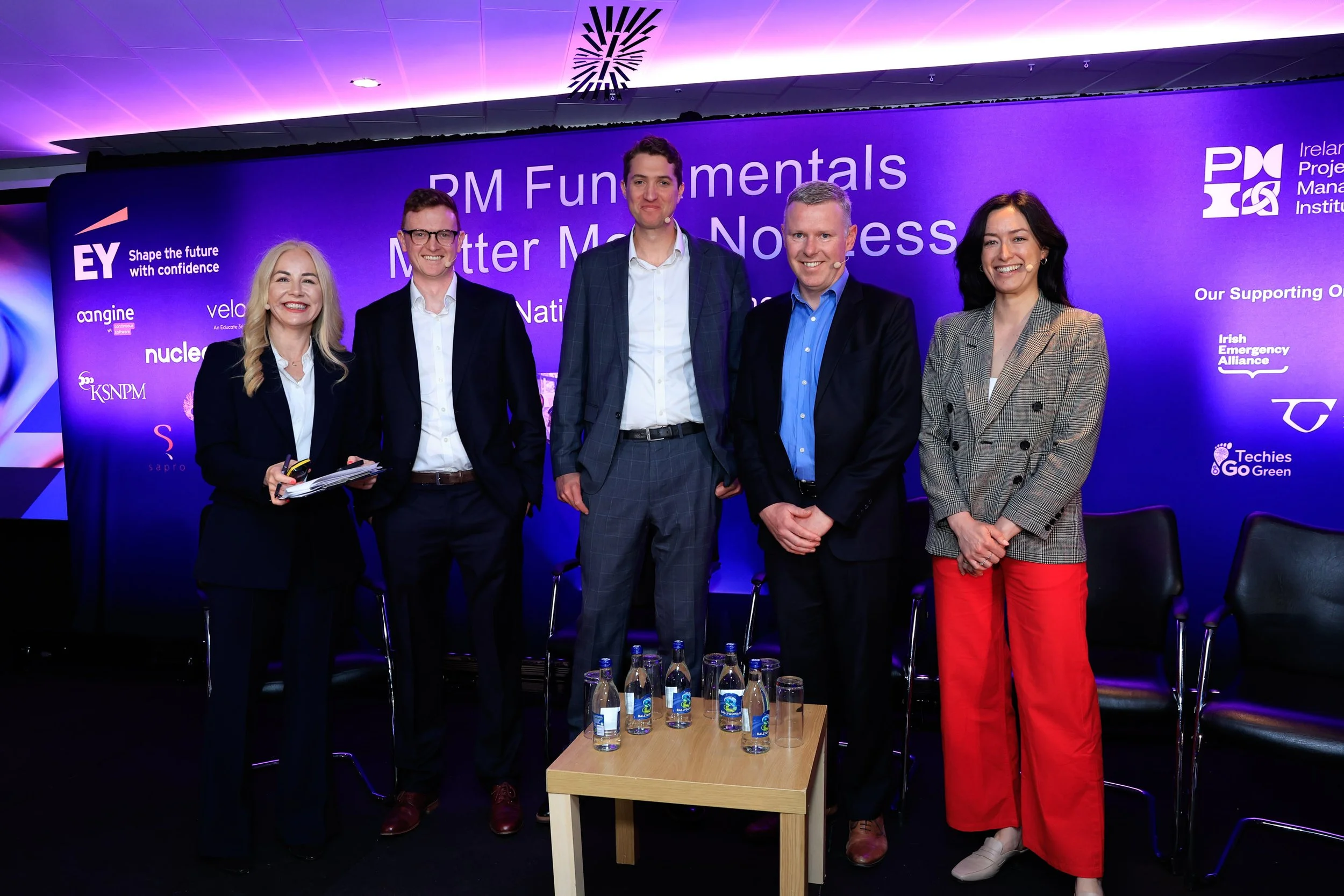
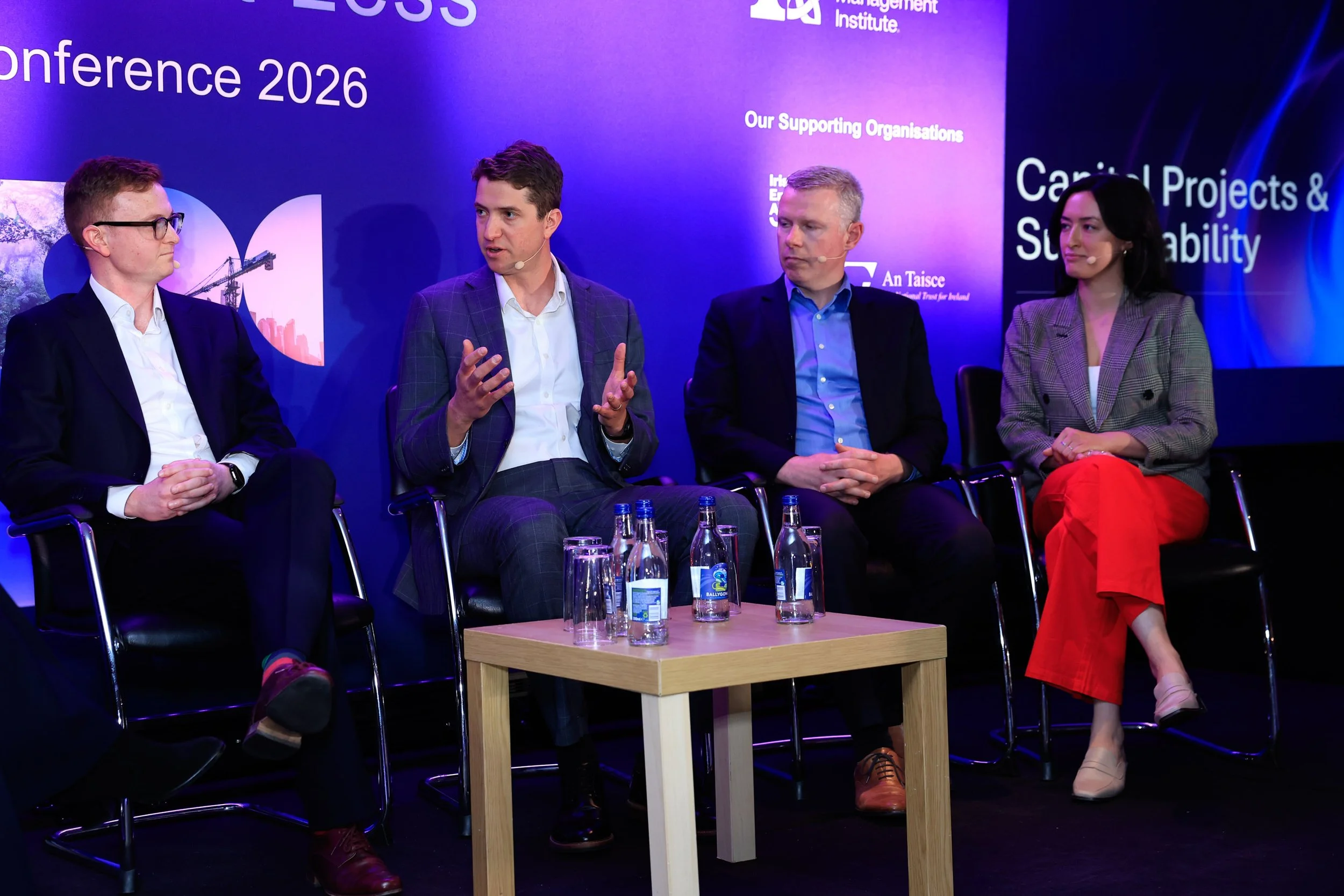
Among the discussions, the panel on Capital Projects and Sustainability, featuring Colectivo’s CEO & Founder Laura McDermott, alongside industry experts like Stephen D. (EirGrid Group), John Kelly CEng FIEI Exec Coach (ESB), and Jay Sattin (Mason Hayes & Curran LLP), offered a timely perspective on how infrastructure delivery is evolving.

Beyond Delivery: Projects as Vehicles for Change
A central theme throughout the panel was a clear shift in how capital projects are understood. They are no longer viewed solely as mechanisms for delivering infrastructure, they are platforms for transformation. This shift requires organisations to move beyond traditional project metrics and consider:
How sustainability is embedded into decision-making
How innovation is integrated without compromising delivery
How the human experience is accounted for across the lifecycle of a project
As projects increase in scale and complexity, these dimensions become critical to long-term success.
The Role of Stakeholders and Public Engagement
One of the strongest points of emphasis was the importance of stakeholder engagement.
Large-scale infrastructure projects do not operate in isolation. They sit within communities, ecosystems, and regulatory environments that shape their success.Public consultation, transparency, and inclusive engagement are no longer optional.
They are essential components of project design.When done well, they build trust, reduce risk, and create alignment between project objectives and societal expectations.

Innovation in Practice
The panel also explored how new approaches are influencing the future of infrastructure delivery.From offshore wind developments to precast construction and modular design, innovation is playing an increasingly important role in shaping how projects are conceived and executed.However, a key insight was that innovation alone is not enough.
It must be supported by strong fundamentals:
Clear project initiation
Robust planning processes
Early understanding of constraints and trade-offs
Without these, even the most advanced solutions risk falling short.
Balancing Complexity with Fundamentals
As organisations navigate transformation, the tension between complexity and clarity becomes more apparent.
On one hand, projects are becoming more sophisticated, with new technologies, sustainability requirements, and stakeholder expectations. On the other, the core principles of project management remain unchanged. Success depends on the ability to:
Maintain strong foundations
Adapt to changing conditions
Integrate new approaches without losing focus
This balance is where effective project leadership becomes critical.


Looking Ahead
The PMI National Conference highlighted the evolving role of project professionals in shaping the future of infrastructure. As organisations face increasing pressure to deliver sustainable, resilient, and scalable solutions, the ability to manage transformation will define success. At Colectivo, we see this as a design challenge. It is about aligning systems, stakeholders, and strategy to ensure that projects do more than deliver outputs, they create long-term impact.

