
♻️What If Engagement Could Do More Than Raise Awareness?
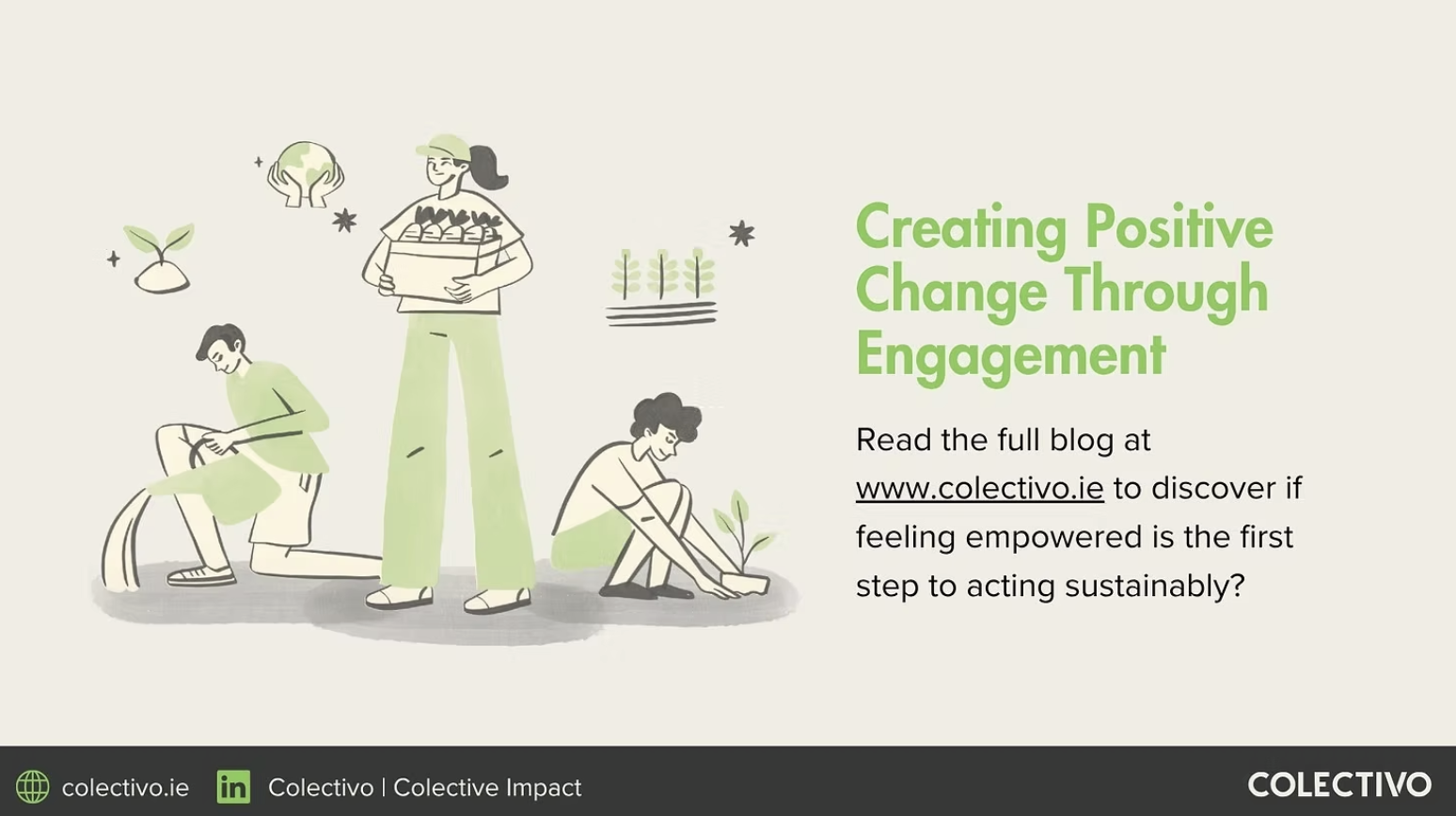
We’re often told that behaviour change comes from information, incentives, or regulations. And while those tools can help, they don’t tell the whole story.
The effectiveness of sustainability initiatives may be increased when they appeal to individuals' emotions, values, and identity, rather than relying solely on rational arguments or external incentives.
Thoughtfully designed engagement can do more than raise awareness. It can support mental well-being, foster a sense of connection, and strengthen people’s sense of purpose. And when people feel less overwhelmed and more empowered, meaningful action becomes much more likely and much more sustainable.
🧠 From Action Plans to Emotional Outcomes
Sustainability is often framed as a technical challenge. But for many people, it’s also an emotional one.
It brings hope, motivation, but also fatigue. And these emotional states shape how people respond to sustainability messages and initiatives.
This is why the psychological concept of Self-Determination Theory is so relevant. It suggests that people are most motivated and most likely to stick with new behaviours, when three core needs are met: autonomy (feeling like they have choice), competence (feeling capable), and relatedness (feeling connected to others).1
If a sustainability initiative only tells people what to do, but leaves them feeling judged, disconnected, or helpless, it likely won’t be effective. But when people feel trusted, supported, and part of something bigger than themselves, engagement in a sustainable way is likely to become much more meaningful.
That’s where the opportunity lies: in designing sustainability efforts that promote not just behaviour change, but emotional outcomes like connection, and clarity.
🧑🧑🧒🧒 Collaboration Over Instruction
We believe in working with people.
Communities, teams, and individuals each bring their own rhythms, values, and challenges.
Sustainable behaviour may take root more strongly when people feel seen, heard, and part of the process.
Sustainable behaviour is seen to foster through co-creation, not enforcement.
🌀 The Real Change is the change in Our Mindset
For change to last, it needs to go deeper than checklists and metrics.
We can ask: How does this leave people feeling empowered, included, capable?
That’s where purpose begins.
At Colectivo, we support organisations in creating sustainability experiences that care for people as much as the planet.
Let’s build a future that feels more human and leaves our planet in a better position.
Colectivo | Collective Impact
Footnotes
¹ Deci, E. L., & Ryan, R. M. (2000). The “What” and “Why” of goal pursuits: human needs and the Self-Determination of behavior. Psychological Inquiry, 11(4), 227–268. https://doi.org/10.1207/s15327965pli1104_01
By Vanya Bansal, BSc Psychology student at UCD
