
From Circular Ideas to Implementation: Reflections from the National Manufacturing & Supply Chain Expo
This month, I attended the National Manufacturing & Supply Chain Expo at the RDS Simmonscourt on behalf of Colectivo. The event brought together voices from across manufacturing, supply chains, digitalisation, automation and sustainability, with a strong focus on the practical realities facing Irish industry today. The event itself is positioned as one of Ireland’s key manufacturing and supply chain gatherings, bringing together industry leaders, innovators and experts to explore developments across the sector.
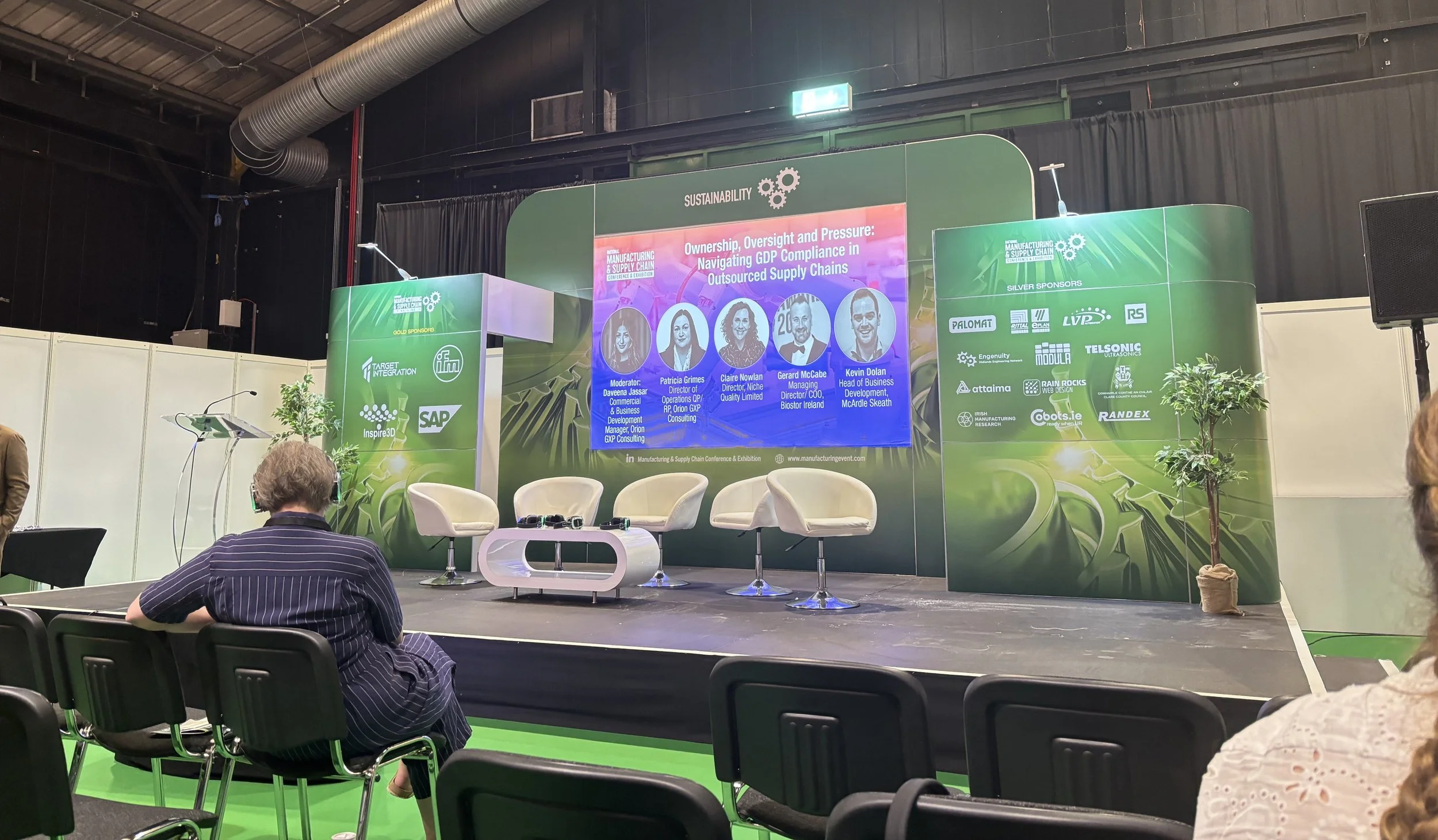
For Colectivo, it was particularly valuable to spend time at the Sustainable Stage, where members of the CIRCULÉIRE Circular Economy Innovation team shared practical insights into how businesses can move from circular economy ambition into action. CIRCULÉIRE is Ireland’s national circular economy platform, led by Irish Manufacturing Research, and works to unite industry, government and innovators to accelerate circular innovation in Ireland.
A key theme running through the sessions was that circularity is no longer just a future-facing concept or sustainability aspiration. It is becoming a practical business capability: something that requires measurement, leadership, experimentation and structured implementation.
Daniel Whelan’s session, “From Insight to Impact: A Practical Approach to Building Circularity,” focused on how organisations can move from baseline understanding to prioritised action. His presentation highlighted tools such as Circularity Maturity Models, GHG Hotspot Assessments and Circular Economy Action Plans as ways for businesses to understand where they are starting from, identify the biggest areas of opportunity, and turn circular ideas into measurable impact.
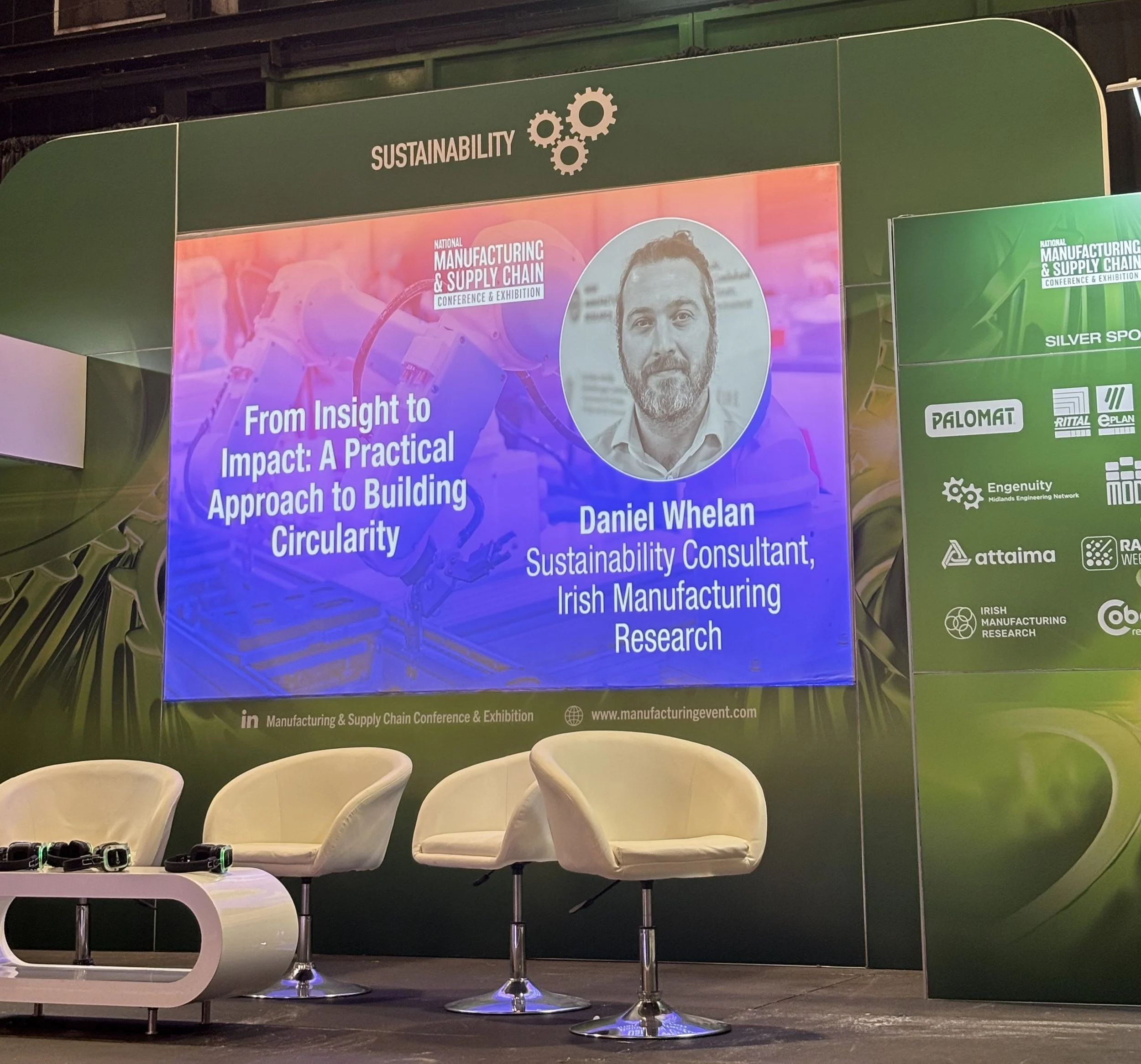
This felt especially relevant because many organisations are not starting from a blank page. They may already have sustainability targets, operational challenges, innovation ideas or pressure from customers and regulators. The challenge is often knowing where to begin, what to prioritise, and how to connect insight with implementation. Daniel’s session reinforced that circularity becomes more achievable when organisations can break it down into practical steps: assess the current position, identify hotspots, prioritise opportunities, and build a roadmap for action.
Later in the day, Niamh O’Sullivan’s session, “Circular Innovation Leadership: Insights on Moving from Ideas to Impact,” explored the leadership and skills needed to make circular innovation happen in practice. Her session drew on findings from theCIRCULÉIRE Circular Skills Insights Report 2025, which examines circular economy skills, jobs, leadership and innovation in Irish industry. The report focuses on bridging the gap between strategy and operational delivery through research and training.
One of the strongest takeaways from this session was that circular innovation is not only a technical challenge. It is also a people, leadership and capability challenge. Businesses may have promising ideas, but bringing them into practice requires confidence, collaboration, internal buy-in and the ability to test and develop concepts in a structured way.
This connects closely to Colectivo’s work with Irish Manufacturing Research and CIRCULÉIRE through the InnoSprints programme. Colectivo has been back delivering InnoSprints for a second edition, building on last year’s momentum and continuing to support organisations in turning circular ideas into projects. The programme is designed as an intensive, hands-on innovation sprint that helps organisations move from early-stage circular ideas towards concrete next steps.
That connection made the sessions particularly meaningful. The conversations at the RDS reflected many of the same challenges that InnoSprints are designed to address: how to move from ambition to action, how to turn ideas into structured opportunities, and how to support teams in developing the confidence and clarity needed to take circular innovation forward.
Across both sessions, the message was clear: circularity needs to be made practical. It is not enough to identify circular opportunities in theory. Organisations need the right structures, tools and facilitation to understand where circularity fits within their business, what actions are most relevant, and how these can be translated into pilots, projects or longer-term strategies.
For Colectivo, this sits closely alongside our work in helping organisations build clarity, direction and momentum around sustainability. Circular economy conversations often require both strategic thinking and practical activation. They ask businesses to look at systems, materials, products, behaviours and decision-making differently. They also require teams to collaborate across functions, challenge existing assumptions and explore new models of value creation.
The event was a useful reminder that circular innovation does not happen through one-off ideas alone. It happens through a process: understanding the current system, identifying opportunities, building capability, testing ideas and creating the conditions for implementation.
Attending the National Manufacturing & Supply Chain Expo offered a valuable insight into where Irish industry is heading and how circular economy thinking is becoming increasingly connected to competitiveness, resilience and sustainability. The sessions from CIRCULÉIRE showed that the transition to circularity is already underway, but that businesses need practical support to turn insight into impact.
At Colectivo, this is where we see real opportunity: helping organisations move beyond intention and into action, whether through strategy, facilitation, innovation sprints or stakeholder engagement. Circularity can feel complex, but with the right tools and process, it becomes a pathway for practical change.

About The Author
Laura Brophy is completing her placement at Colectivo while pursuing a Bachelor’s degree in Geography and Geosystems at the University of Galway. Her academic focus includes sustainability, environmental systems, and building resilient futures. At Colectivo, she is learning how businesses can turn intentions into measurable impact, with a particular interest in making complex sustainability concepts clear and actionable.
