
Where in the design process does sustainability actually get built in, rather than bolted on at the end? Two designers walk through the cycle, stage by stage.
Laura McDermott and Maria Camacho sit down to chat about something that sits underneath every product, service and business: how it gets designed in the first place.
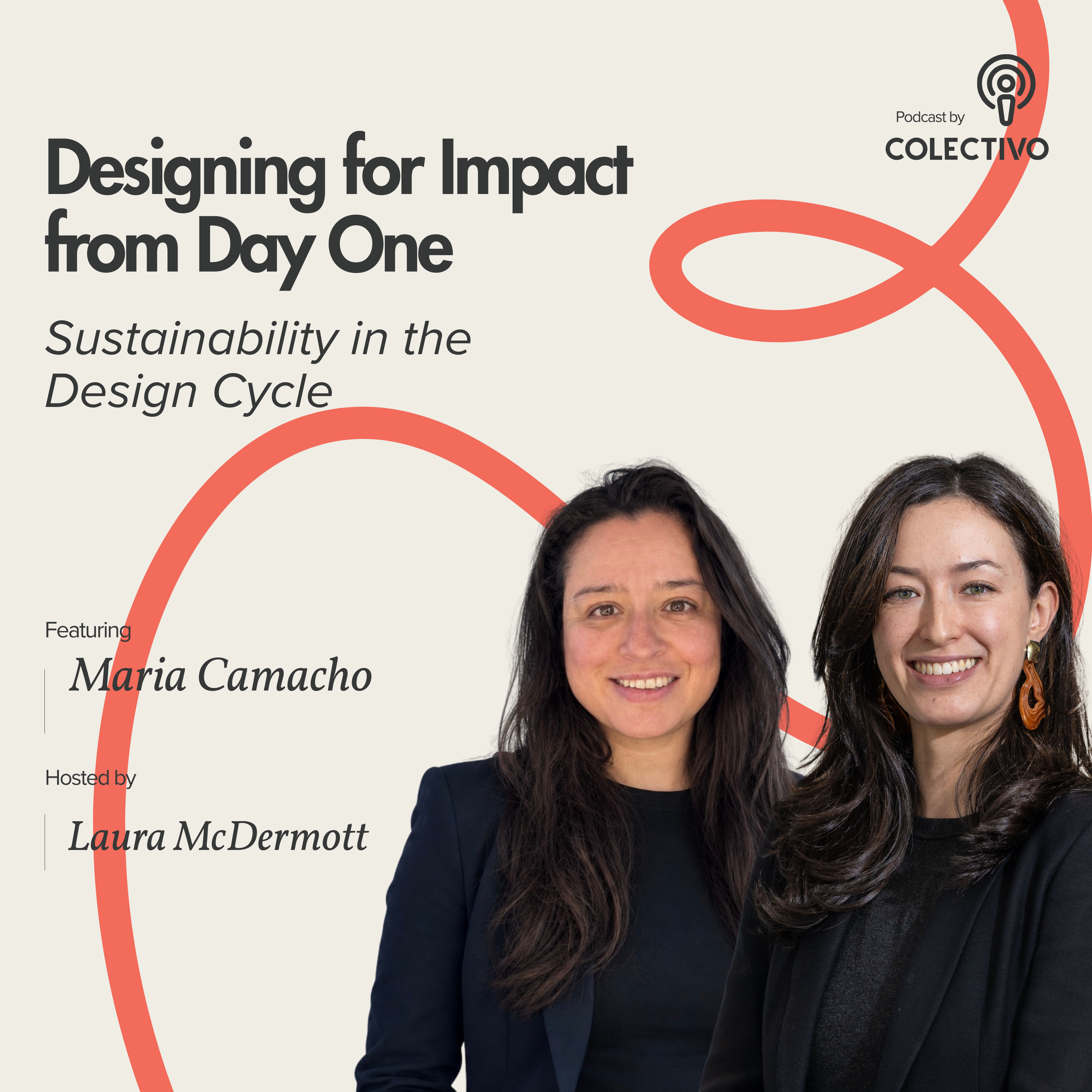
We’ve spent the last few episodes of the Colectivo podcast exploring eco-design, behavioural design and, through our Stories of Inspiration series, digital product design. This time, Laura wanted to go right back to the beginning: how does something get designed in the first place?
She’s joined by Maria Camacho, founder and CEO of The Human Factor, a design and innovation studio in New York. Laura and Maria are both designers by training, so they speak the same language. Together they set out to answer one simple question: when, in the design process, should sustainability come in?
Listen to the full episode on Spotify
1. The one question to ask before you write the brief
Laura kicks things off with a warm-up: if you had just one minute with a founder before they wrote their first brief, what would you want them to ask themselves?
Maria goes straight to people: Have I actually talked to my potential customers? It’s so tempting to rush into the brief before you really understand the problem. Getting out there, listening with empathy and paying attention to what people feel, say and do is how you find the root cause.
Laura brings in the planet: What environmental or nature-based challenge am I trying to tackle? Even the most exciting idea is wasted effort if it isn’t rooted in a real need. And once it reaches production, it can mean more waste and more resources used for nothing.
Put the two questions together and you have both sides of impact: people and planet.
2. Where sustainability belongs in the design cycle
Maria shares a frustration we hear a lot: sustainability tends to show up as an afterthought. It comes after the idea, after the execution, and after the communications. So Laura and Maria walk through the design cycle together and pick out the moments where they’d bring it in.
You’ll hear them go through every stage in the full episode, but here’s a sneak preview of two:
Planning and systems design. For Maria, this is where it all starts. Build sustainable decisions into the system itself, at process and business-model level, and they become “part of the soul of the idea” rather than something added on.
Prototyping. Laura shares a visit to Fab Lab Barcelona, a maker space where people experiment with how materials bond, flex and last, with the goal of replacing single-use materials. It raises a great question for any team building a prototype: instead of reaching for the default material, what could we test?
3. Built in, not bolted on: three examples we love
A retail system shaped by a constraint. Maria talks about her team’s recent work with a consumer packaged goods brand on a retail auditing system, which covers how displays reach stores across the United States. They looked at it as a whole system and made sustainability one of three guiding pillars. That constraint shaped the final solution and made it better than anyone first imagined. In Maria’s words, constraint is always good for creativity, and sustainability deserves a place alongside time and budget.
Ecoalf: starting with the waste. Most fashion brands design a collection first and then go looking for materials. Spanish brand Ecoalf turns that on its head. It works with fishing communities to recover plastic from the ocean and turns it into threads, fabrics and pieces built to last. It’s eco-design in action, with the thinking done right at the start.
L’Eautelier’s seaweed suite. During Climate Week, Laura stepped inside a New York hotel suite created by Morgan Ræ of L’Eautelier, who joined us on an earlier episode. Almost everything was made from marine and bio-based materials, from the bed linen to seaweed-based mascara and nail polish. Even the in-room snack and toiletry packaging was home compostable. With the EU’s Packaging and Packaging Waste Regulation (PPWR) pushing towards full recyclability, it was a glimpse of what’s coming.
Laura links this back to prototyping. Imagine redesigning a soap package so it’s easier to open for someone with limited hand mobility. That’s an inclusive design challenge. And once you have a prototype in your hands, it’s the perfect moment to also ask which materials you could swap.
4. Bring a sustainability expert into the room
All of this leads Maria to one clear conclusion. Sustainability experts shouldn’t sit in a silo, waiting to be consulted once the design is done. They belong at the heart of the design process, helping teams see where materials and processes could change while still delivering the same value, and without hurting the bottom line.
Laura agrees, and adds one thing. Design has to start with the human need, because if people don’t adopt a solution, it will never make it out into the world, however good it is for the planet. The environmental lens then becomes the next layer. It’s a big part of why we’re called Colectivo: the best outcomes come from bringing different perspectives together, with industrial designers, strategic designers, brand people and materials experts all at the same table.
Listen, share and keep going
Listen to the full conversation on Spotify
Has this episode made you rethink where impact sits in your own process? Follow or rate the podcast, and share it with someone working in the space. It helps spread the collective ideas behind the series.
If you enjoyed it, these episodes sit nicely alongside it:
Stories of Inspiration with Progress Systems and Austin O'Halloran: designing for inclusivity and accessibility on a mobile banking platform
Morgan Ræ of L'Eautelier: eco-design, marine materials and the PPWR
Links from the episode
