
Harnessing AI for Effective Sustainability Collaboration: Bridging the Intention-Action Gap
In today's fast-paced world, the concept of sustainability has evolved into a collective responsibility, demanding teamwork and innovative approaches. In this blog post, we will explore how AI tools can enhance collaboration within multidisciplinary teams and address the critical intention-action gap that often hinders progress. Learnings and takeaways have been informed by a recent session on “Resilience by Design: An AI Toolbox Talk for High-Impact Collaboration“ held with Marco van Hout, founder of Metodic.io
Understanding the Intention-Action Gap: The intention-action gap refers to the disconnect between our intentions to act on sustainability and the actual steps we take. This phenomenon is prevalent in collaborative environments where teams may struggle to align their goals and actions effectively. One of the key insights shared by Marco, a seasoned expert in design innovation for sustainability, is that overcoming this gap requires not just intention but structured methodologies to facilitate teamwork.
The Role of AI in Enhancing Collaboration: AI tools can serve as catalysts for collaboration, providing frameworks that help teams navigate complex challenges. These tools can streamline communication, manage workflows, and offer data-driven insights that empower teams to make informed decisions. For instance, during the Global Goals Jam, a programme initiated by Marco, participants from diverse backgrounds come together to brainstorm solutions to global challenges. Here, AI can foster synergy by helping teams document their ideas and visualise potential outcomes.
Building Resilience Through Design Thinking: Design thinking principles play a crucial role in creating an environment where innovation thrives. By employing design methodologies, teams can shift from fragmented workflows to cohesive action plans. Marco emphasises that resilience is not merely about surviving challenges but thriving under pressure. The ability to adapt and innovate collectively is vital in today’s uncertain landscape.
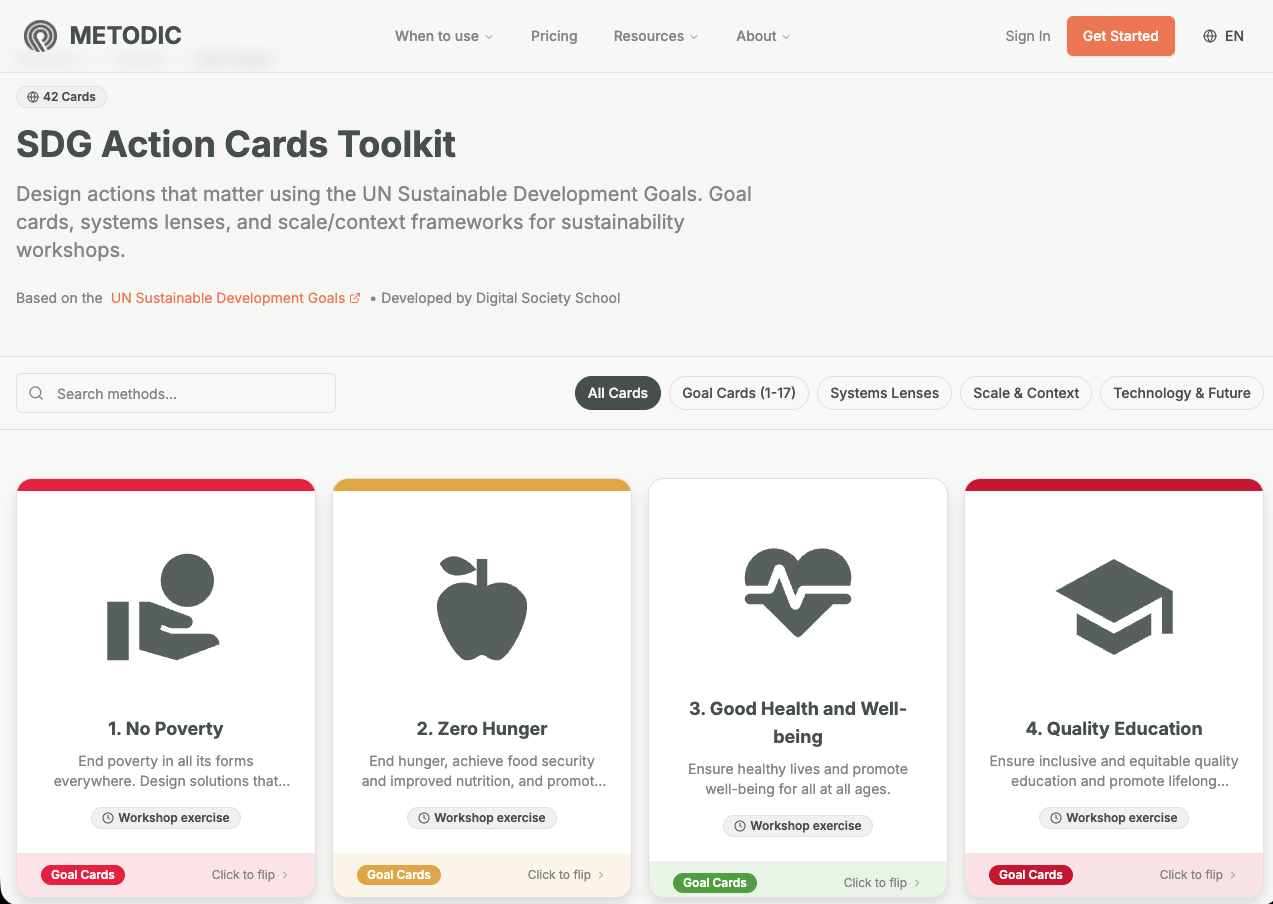
Real-World Applications of AI in Sustainability: To illustrate the practical application of AI in collaborative settings, Marco introduced Metodic.io’s SDG toolkit developed over years of experience. This toolkit serves as a common language for design, enabling teams to work together more effectively. By utilising Metodic resources, teams can harness their collective strengths and address sustainability challenges with a unified vision.
Turning Insights into behavioural Change:
For us, a core insight connecting every component of the Marco van Hout session is that true organisational transformation is an exercise in human behaviour change. You can deploy software platforms and draft the most elegant design strategies, yet your sustainability initiatives will inevitably fail if your workforce remains unequipped or unmotivated to alter their daily habits. Capacity building and using empathy-based approaches often championed in Design Thinking methodologies can be powerful levers for change, while technologies help is to optimise and become more efficient in the process.
This critical intersection bridges Colectivo’s Redesign and Activate service pillars. Through Redesign, we partner with clients to re-engineer their systems, workflows, and technical toolkits using advanced platforms like Metodic.io to build long-term operational resilience. Through Activate, we focus entirely on the human element: translating those redesigned frameworks into practical capability building, training modules, and cultural alignment. If you’re interested in learning more, reach out to us or follow us on Linkedin!
